Good, I have the live current EPA URL: https://www.epa.gov/ipm/introduction-integrated-pest-management. Now I have everything needed to write the final, optimized post.
Tree spraying in Jackson, MS protects pines and hardwoods from the insects and fungal disease that thrive in the city's humid summers and clay-heavy soil. If your canopy is thinning, bark shows boring dust or pitch tubes, or leaves are curling and spotted, the window for an affordable fix is closing fast. This guide breaks down what a spray program actually treats, when a DIY fix is enough, and what to expect when a crew shows up.
Common Tree Pests and Diseases in Jackson, MS
Jackson-area trees face four recurring threats, and each one is tied to a specific season and treatment approach. Knowing which one you're facing is the first step toward deciding whether you need a single spray or a sustained program.
- Pine bark beetles (Southern pine beetle and Ips) attack stressed pines, especially during hot, dry stretches.
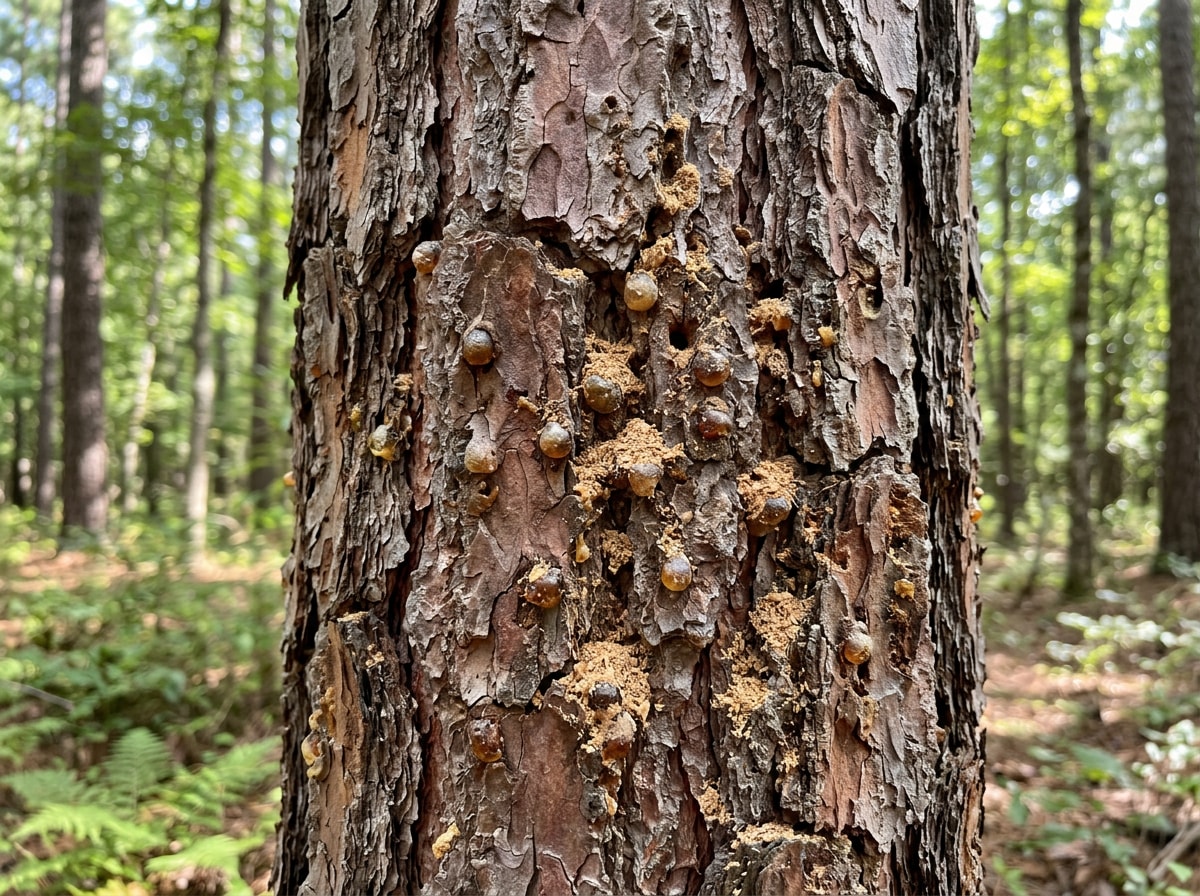
Ips beetles carve distinctive grooves on the interior bark of pine trees to lay eggs, and drought conditions tend to increase their activity.
At high-outbreak population levels, these beetles will attack healthy, vigorous pine trees, killing them regardless of age, health, or condition. Watch for signs of beetle damage like pitch tubes on the trunk.
- Fungal diseases, including root rot and leaf spot, thrive in Jackson's humidity and show up as wilting, cankers, or premature leaf drop, usually in spring and late summer.
- Webworms and bagworms build visible silk nests in branch tips during early-to-mid summer, stripping foliage if left untreated.
- Japanese beetles skeletonize leaves from June through August and tend to return yearly once a landscape is established.
There's a timely reason to take this more seriously in 2026. Pine beetle populations often increase after severe storms, creating additional risk over the following years, so landowners should exercise diligence and practice sound forest management to detect, prevent, and control these threats. After the ice damage that hit central Mississippi stands, that means more stressed pines sitting closer to homes than usual. In our own route through Jackson-area yards, we've seen Ips activity spike within two to three weeks of a stalled heat wave, which is faster than most homeowners expect from a "beetle problem."
Spray timing matters for all four threats. Treating after symptoms are advanced is far less effective than catching early signs. For current regional pest activity, galleries in the bark will indicate whether Ips or southern pine beetles are present, and forestry specialists recommend watching for symptoms rather than waiting to spot the beetles themselves , a detail tracked by the Mississippi State University Extension Service.
What Tree Spraying and Pest Management Actually Involves
Tree pest and disease management means identifying, treating, and preventing insect infestations and fungal infections through targeted spraying, soil treatments, and monitoring. It's a different job than pruning or removal, which only address damage that's already happened.
Unlike a one-time trim, a tree spraying program is proactive. It's built around pest life cycles and disease patterns specific to the region, which is why timing and product selection matter as much as the application itself. This approach follows what the EPA calls an environmentally sensitive pest management strategy that relies on a combination of common-sense practices , rather than routine blanket spraying. You can read more in the EPA's introduction to Integrated Pest Management. The goal throughout is simple: protect tree health before a treatable problem turns into a removal job.
Why Treating Pests Early Matters
Untreated pests and disease don't stay contained. A single infected or infested tree can threaten every tree in a yard, since many pests and fungal spores spread easily once established.
Beyond the trees themselves, there's a real cost to waiting. Declining trees lower property value, create safety risk from weakened limbs or root systems, and often end up costing more to remove than they would have cost to treat early. Addressing a problem while it's still localized is almost always the cheaper path, and it's worth getting ahead of it with an arborist consultation before symptoms spread to neighboring trees.
Tree Spraying Services We Cover
A complete tree spraying program addresses two categories of damage: insects that feed on leaves, bark, and branches, and fungal diseases that attack from the inside out. Insect control and fungus control run on different schedules and use different products, which is why most treatment plans cover both.
Insect Control
Jackson-area trees commonly deal with Japanese beetles, webworms, aphids, and scale insects, all of which feed directly on foliage or bark. Left alone, these pests weaken a tree's ability to produce energy through its leaves and can spread quickly to nearby shrubs and ornamentals.
Targeted insect control uses spray treatments timed to when each pest is actively feeding, which stops damage early rather than after a tree is already stressed. A single spray is rarely a permanent fix. Most insect pressure requires monitoring across the growing season.
Fungus Control
Mississippi's humidity and clay-heavy soils make fungal disease one of the most persistent problems for trees in the Jackson area. Poor drainage and dense canopies trap moisture, creating ideal conditions for leaf spot, root rot, and canker diseases to spread.
Fungus control relies on fungicide applied before symptoms fully develop, since fungal infections are much harder to reverse once they've taken hold internally. Pairing fungicide treatment with better drainage and pruning for airflow meaningfully reduces repeat outbreaks year over year.
Our Seasonal Tree and Shrub Spray Program
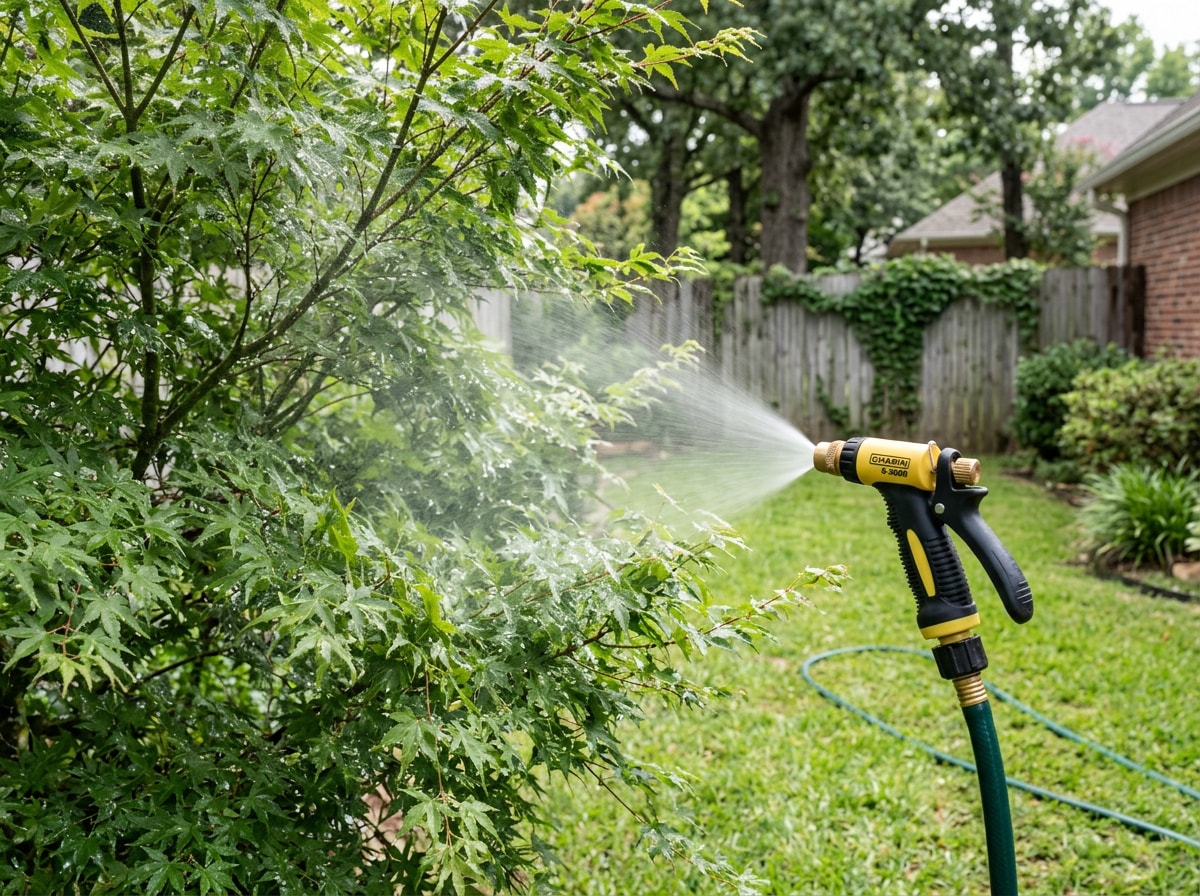
Rather than a single spray, effective treatment follows a seasonal schedule timed to pest life cycles from spring through fall. Two visits in that schedule carry the most weight for Jackson-area properties:
| Visit | Timing | Primary Focus |
|---|---|---|
| Visit 3 | Early summer | Combined insecticide and fungicide application as insect feeding and early fungal growth both ramp up |
| Visit 5 | Late summer | Miticide added alongside standard insect treatment to catch mite pressure before foliage stipples and bronzes |
Catching problems at these stages is why a scheduled program outperforms a one-off spray. By the time stippled or bronzed leaves are visible, the mite population has already done its damage.
What a Spray Visit Actually Includes
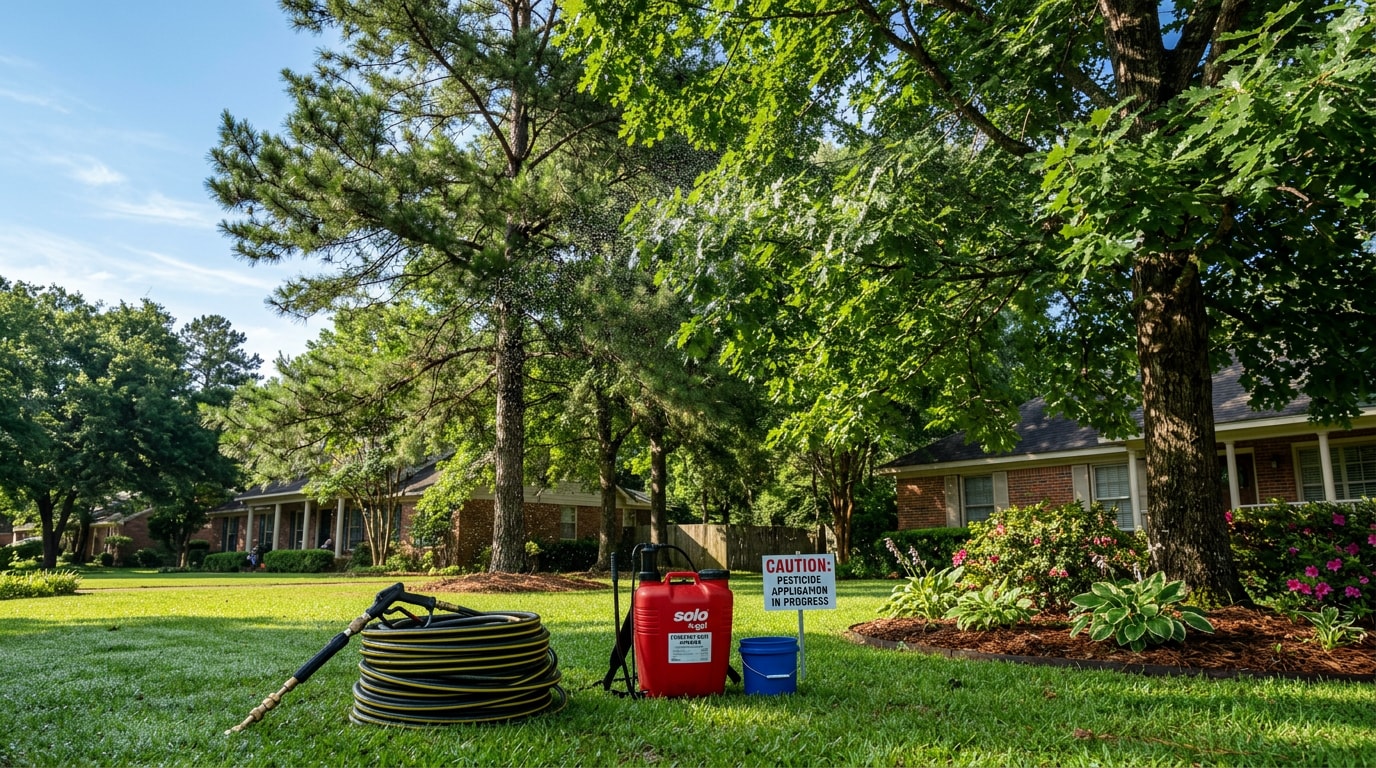
Knowing what to expect helps homeowners understand the process beyond just "spraying a tree." A typical visit combines several steps:
- Deep root feeding to strengthen the tree from below
- Targeted insect and disease control on ornamentals, timed to current pest activity
- Dormant treatment applied in late winter to kill overwintering insect eggs before they hatch
- A visual inspection for early symptoms that might call for an adjusted plan next visit, since pest pressure shifts year to year with weather and rainfall
This guide reflects what our ISA-trained crews see treating pines, oaks, and ornamentals across Jackson, Madison, and Rankin counties every season. If you want eyes on your property before committing to a plan, request a free estimate and we'll walk the yard with you.
FAQ
What is tree pest management?
It's the process of identifying, controlling, and preventing insects and diseases that damage trees. It combines regular inspection, targeted treatment, and professional intervention when an infestation is beyond what routine care can handle.
How often should I inspect my trees for pests?
Once per season is reasonable for most Jackson-area properties, with closer attention during peak pest months from late spring through summer. Trees stressed by drought or recent storm damage need more frequent checks, since weakened trees attract pests faster.
Can I handle tree pest issues on my own?
Minor infestations can often be managed with neem oil, mild insecticidal soap, and consistent watering and mulching to reduce tree stress. Widespread insect activity, fungal cankers, or signs of structural weakness are strong signals it's time to call a professional rather than risk the problem spreading.
How much does professional tree pest management cost?
Cost depends on the type and severity of the pest or disease, the tree's size and location, and how many treatments are needed. Estimates are best given after an on-site assessment. Request a free quote for pricing specific to your property.
When is the best time to spray trees in Jackson, MS?
It depends on the pest. Dormant treatments go down in late winter before eggs hatch, insect and fungicide combinations work best in early summer as feeding ramps up, and mite treatment is most effective in late summer before foliage damage sets in. Waiting until symptoms are obvious always costs more than treating on schedule.
Are there eco-friendly options for managing tree pests?
Yes. An integrated approach uses knowledge of the pest's habits and life cycle, applies the least toxic methods first, and monitors activity before resorting to broader pesticide use , which keeps impact on beneficial insects and surrounding plants to a minimum. Ask about IPM-based options when you schedule service.
Is tree spraying safe for pets, people, and pollinators?
Licensed applicators time treatments and select products to limit exposure to people and pets, and most residential programs avoid spraying open blooms to protect pollinators. Always ask your provider which products they're using and when it's safe to let kids or animals back into the yard.
Jackson's climate isn't forgiving to stressed trees, but most pest and disease problems are manageable when they're caught early. Whether you're dealing with a single pine showing pitch tubes or a yard full of ornamentals with leaf spot, start with an inspection rather than a guess. Visit the homepage to see our full range of tree care services, browse our tree service offerings, or contact us for a free estimate before the next growing season gets ahead of you.