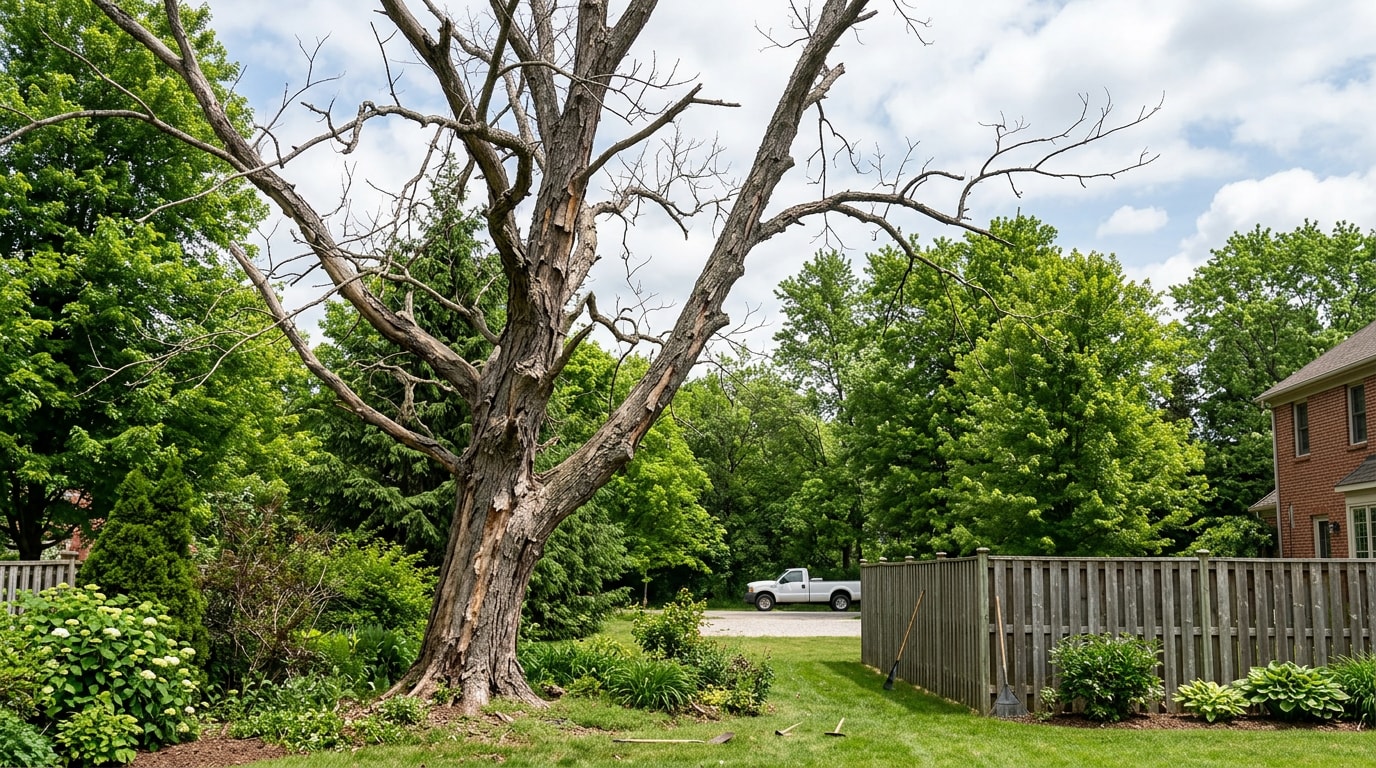
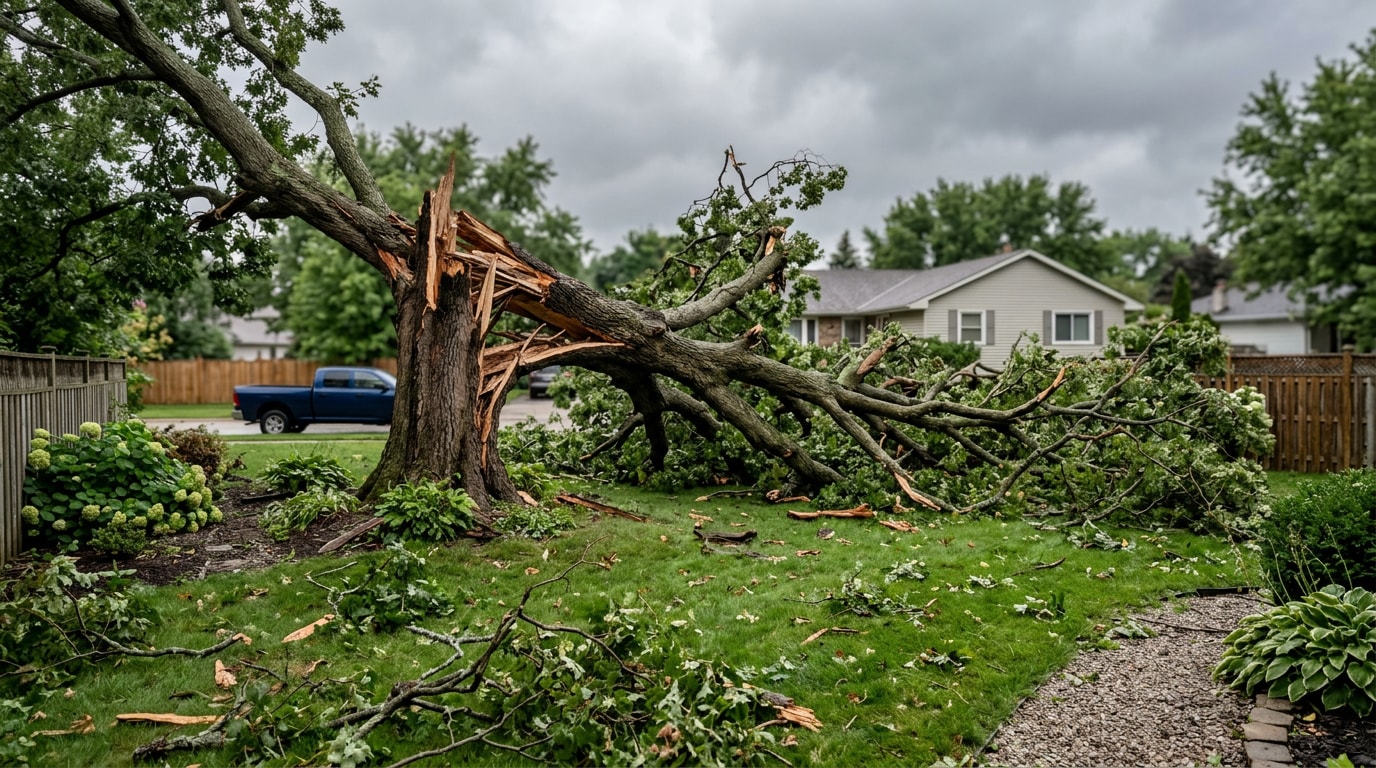
Storm damage tree removal in Richland, MS usually starts the same way: a line of thunderstorms moves through, and a pine is suddenly across the driveway or a limb is resting on the roofline. The first priority is safety. The second is understanding what the removal process actually involves and whether insurance will help cover it. This guide walks through the process, the cost factors, and the coverage questions Richland homeowners ask most after a storm.
What Storm Damage Tree Removal Includes
Storm damage tree removal is the process of safely assessing, cutting, and hauling away a tree damaged in a storm. It starts with a hazard inspection for leaning trunks or hanging limbs. It ends with stump grinding and full debris cleanup so the property is safe again.
Rapid Hazard Assessment
Before any cutting starts, a crew walks the property first.
They check for downed power lines, leaning trunks, and hanging limbs, sometimes called widowmakers, that could drop without warning.
This step matters because storm-damaged trees don't behave like routine removals. A trunk with a lifted root plate can shift mid-cut. A tree already resting on a roof or fence carries stored tension that releases unpredictably once a saw touches it.
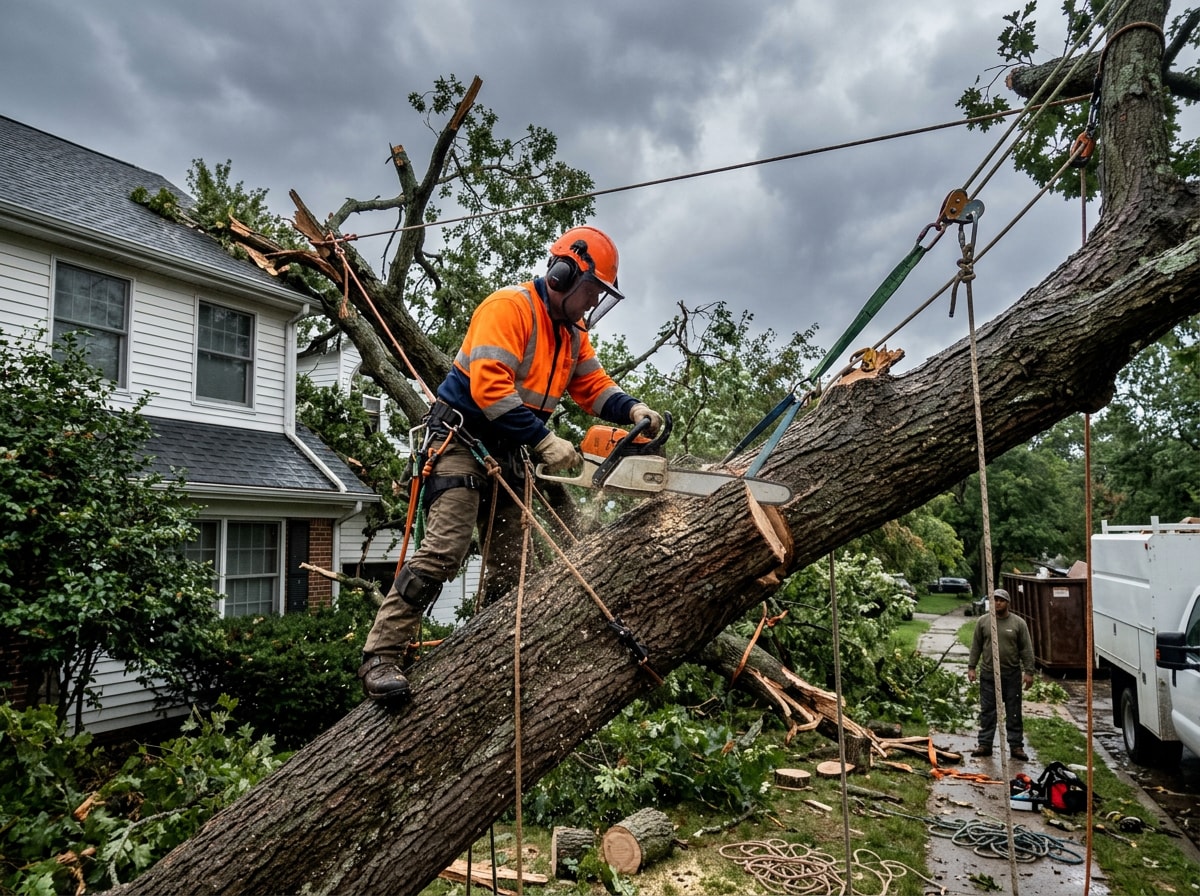
That's why rigging and sectional cutting are often used near structures and utility lines instead of a straightforward felling cut. These practices follow the hazard-assessment approach OSHA outlines for tree care and removal operations, which is part of why true emergencies get handled by a dedicated emergency tree removal crew rather than a routine trim job.
Stump Grinding, Debris Cleanup & Hauling
Once the hazardous sections are down, the job isn't finished.
A complete tree removal includes:
- Cutting the trunk and limbs into manageable sections
- Stump grinding or root extraction so the area is safe to walk and mow again
- Hauling logs, brush, and debris off-site
This final cleanup stage is what separates a complete removal from a crew that cuts the trunk into pieces and leaves the yard full of wood.
Will Insurance Cover Storm Damage Tree Removal?
Coverage usually comes down to one question: did the tree hit something insurance protects?
| Scenario | Typically Covered? |
|---|---|
| Tree falls on your house, garage, or fence | Usually yes, as part of the structural damage claim |
| Tree falls in the open yard, no structure hit | Usually no, though some policies add a small debris-removal allowance |
| Tree blocks a driveway or accessibility ramp | Sometimes, varies by carrier |
| Preventive removal of a healthy or leaning tree before it falls | No |
According to the Insurance Information Institute, a standard homeowners policy covers the cost of removing a tree that hit an insured structure, generally up to about $500 to $1,000 depending on the insurer. If the same tree falls in the open yard without touching a covered structure, many policies exclude removal costs entirely.
Policy language varies by carrier, so treat this as general guidance, not a claims guarantee. For a deeper breakdown of how adjusters evaluate these claims, see our guide on whether homeowners insurance covers tree removal.
Storm Damage Tree Removal Cost Factors
No two storm jobs cost the same. These are the variables that move the price most:
| Factor | Why It Matters |
|---|---|
| Tree size and species | Larger trunks and dense hardwoods take longer to cut and haul |
| Location on the property | A tree on a roof or near power lines needs rigging, not a straight drop |
| Access for equipment | Fenced yards or tight side lots slow the job down |
| Number of trees down | Whole-property storm cleanup costs more than a single tree |
| Stump grinding | Often priced separately from the removal itself |
A tree resting on a roof usually costs more to remove safely than one that's already down in an open yard, since the crew has to protect the structure while cutting.
Smart Tree Removal Steps After a Storm
Calling a crew is only part of the process. These four steps help the removal go faster and safer.
Choose the Right Professional
Not every tree service carries the insurance or equipment for hazardous, storm-damaged work. Look for a licensed tree service with documented experience handling leaning trees, trees resting on structures, and trees still under tension.
Know Your Trees
Not every storm-damaged tree needs removal.
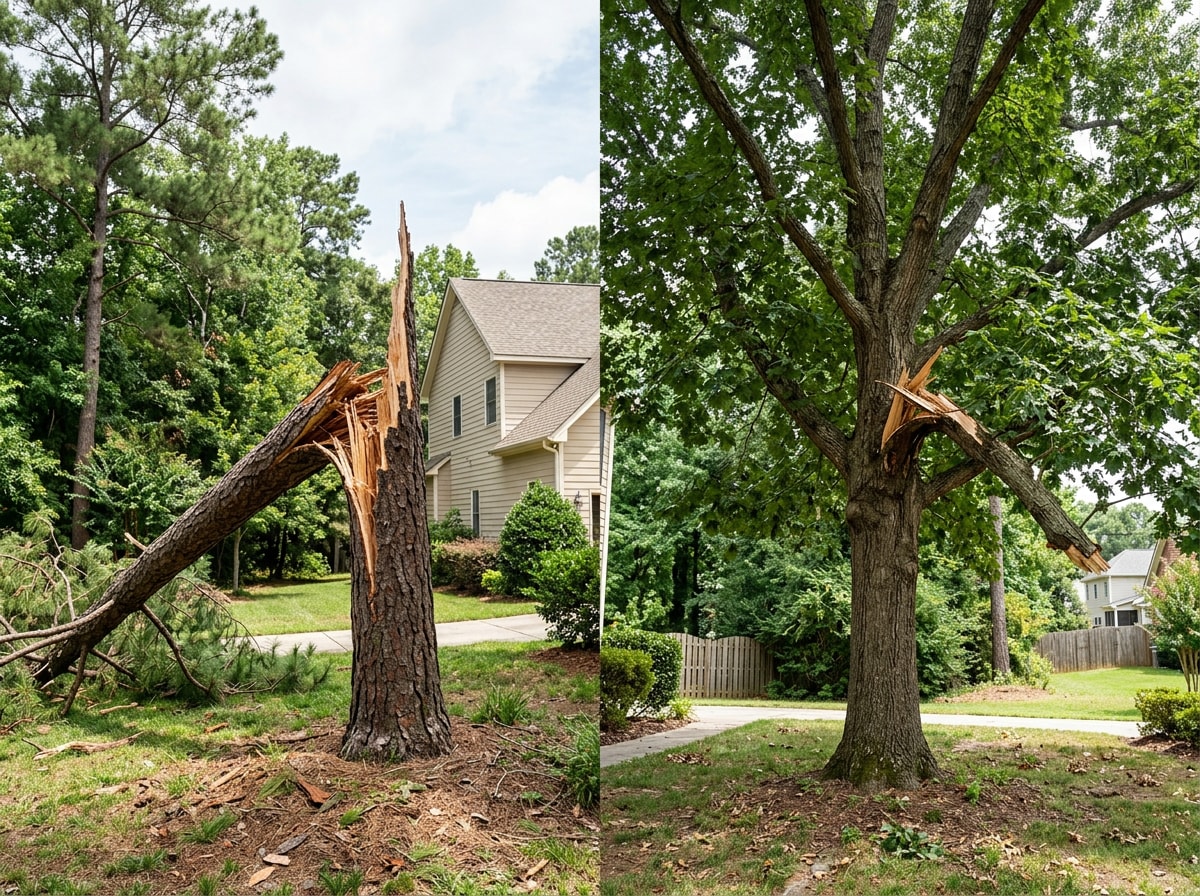
- Pines with snapped tops or split trunks rarely recover and usually need to come down.
- Hardwoods like oaks can sometimes survive losing a major limb if the trunk and root system are intact.
A quick condition check tells the difference, and it's worth doing before assuming the worst.
Plan Ahead
After a widespread storm, crews are often booked with true emergencies first. A leaning tree that isn't actively threatening a structure can usually wait a few days, but scheduling removal promptly is still wise before the next weather system arrives. Request a free estimate early so you're in the queue before demand spikes.
Prioritize Safety
Storm-damaged trees carry risks that aren't obvious from the ground.
Broken limbs can hold stored tension that releases violently when cut. A compromised root system can let a whole tree shift without warning. That combination is a major reason DIY cutting is discouraged after a storm, and it's the same reason crews lean on controlled, section-by-section cuts instead of a single felling cut near a house.
Preventing Storm Damage Before the Next Storm
Storm damage isn't entirely unpredictable.
Thinning a dense canopy lets wind pass through branches instead of pushing against them, which can lower the chance of a trunk snapping or a tree uprooting in high wind. Purdue University's forestry extension notes that functional pruning helps trees form a healthier, more wind-resistant crown, while removing low branches near a roofline reduces the chance of building damage.
This kind of canopy management, whether through tree trimming or structural pruning, isn't an emergency fix. It's groundwork done between storms, ideally before severe weather season, to reduce the odds of needing emergency removal later.
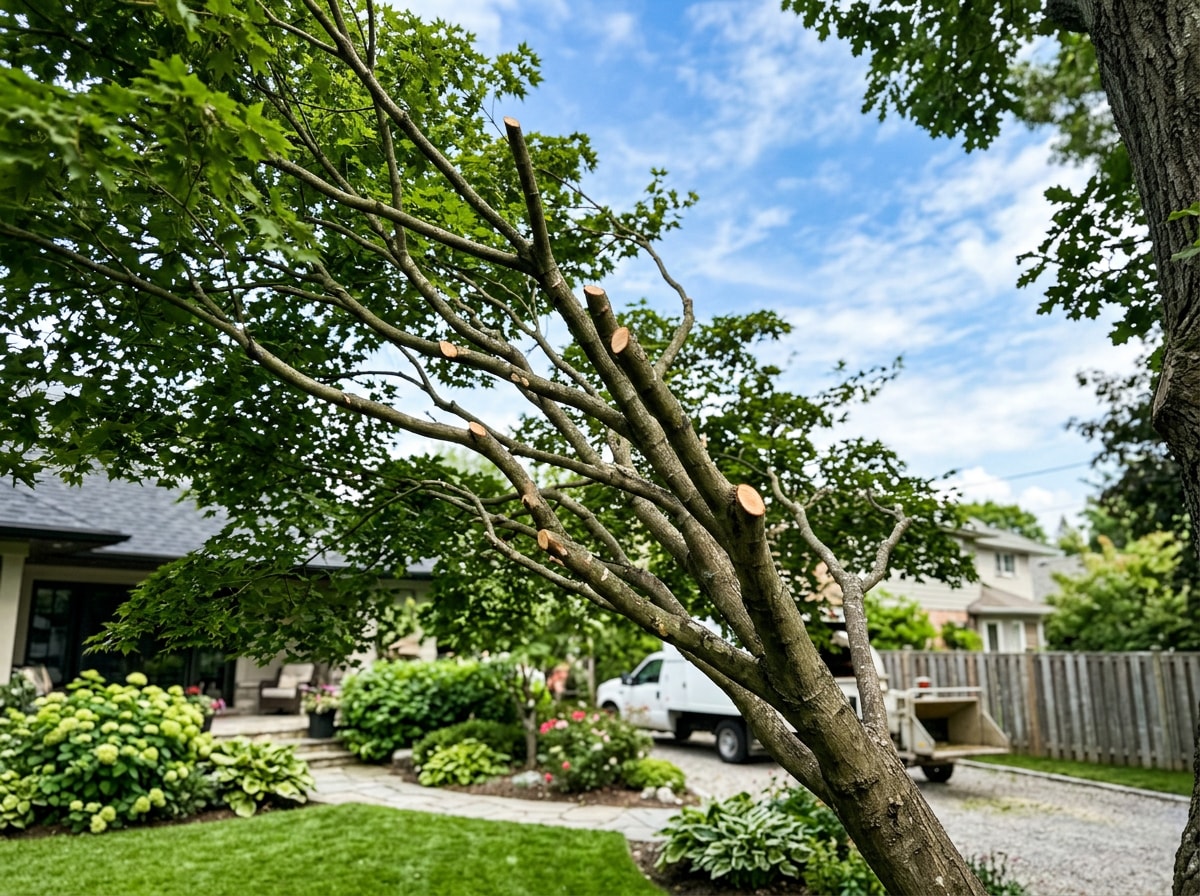
Crews that handle storm cleanup in Richland see the same pattern every season: trees with a thinned, balanced canopy come through wind events with far less breakage than ones that were never maintained.
If a recent storm left your yard with downed limbs, a leaning trunk, or a tree resting on the house, Couch Tree Service can assess the damage and tell you straight whether it's a removal, a prune, or a wait-and-see. Contact us for a free on-site assessment.
FAQ
What Areas Do You Serve for Storm Damage Cleanup?
Richland, MS and the surrounding Hinds, Rankin, and Madison County area fall within the regular service footprint, including neighborhoods near downtown and along outlying county roads.
How Fast Can You Respond After a Storm?
Genuine emergencies, such as a tree on a house, blocking a driveway, or resting on power lines, get priority response. Non-urgent storm cleanup is typically scheduled within a few days, depending on storm-wide demand across the area.
Will Insurance Pay for Storm Damage Tree Removal?
Usually only if the tree damaged a covered structure like your house, garage, or fence. A tree down in the open yard with no structural damage is often not covered, though some policies allow a small debris-removal exception. Confirm the specifics with your adjuster before assuming either way.
How Much Does Storm Damage Tree Removal Cost?
Cost depends on the size and number of trees, how hard the property is to access, and whether the tree is under tension or leaning on a structure. Stump grinding is often a separate line item from the removal itself.
Can a Tree Survive After Major Storm Damage, or Does It Need to Be Removed?
A tree can often survive storm damage if less than a quarter of its canopy is gone and the trunk and root system are intact. Heavy canopy loss, a split trunk, or an uprooted base usually mean removal is the safer choice. When it's unclear, a professional on-site evaluation settles the question before you decide.